 Español
 English

Shopping Cart
⭐ 4.8/5 (480+ verified reviews)24–48h shipping, mainland SpainOwn manufacture, EUFree technical support
SDT Brakes
What Is a Brake Caliper? Types, Function and Common Faults
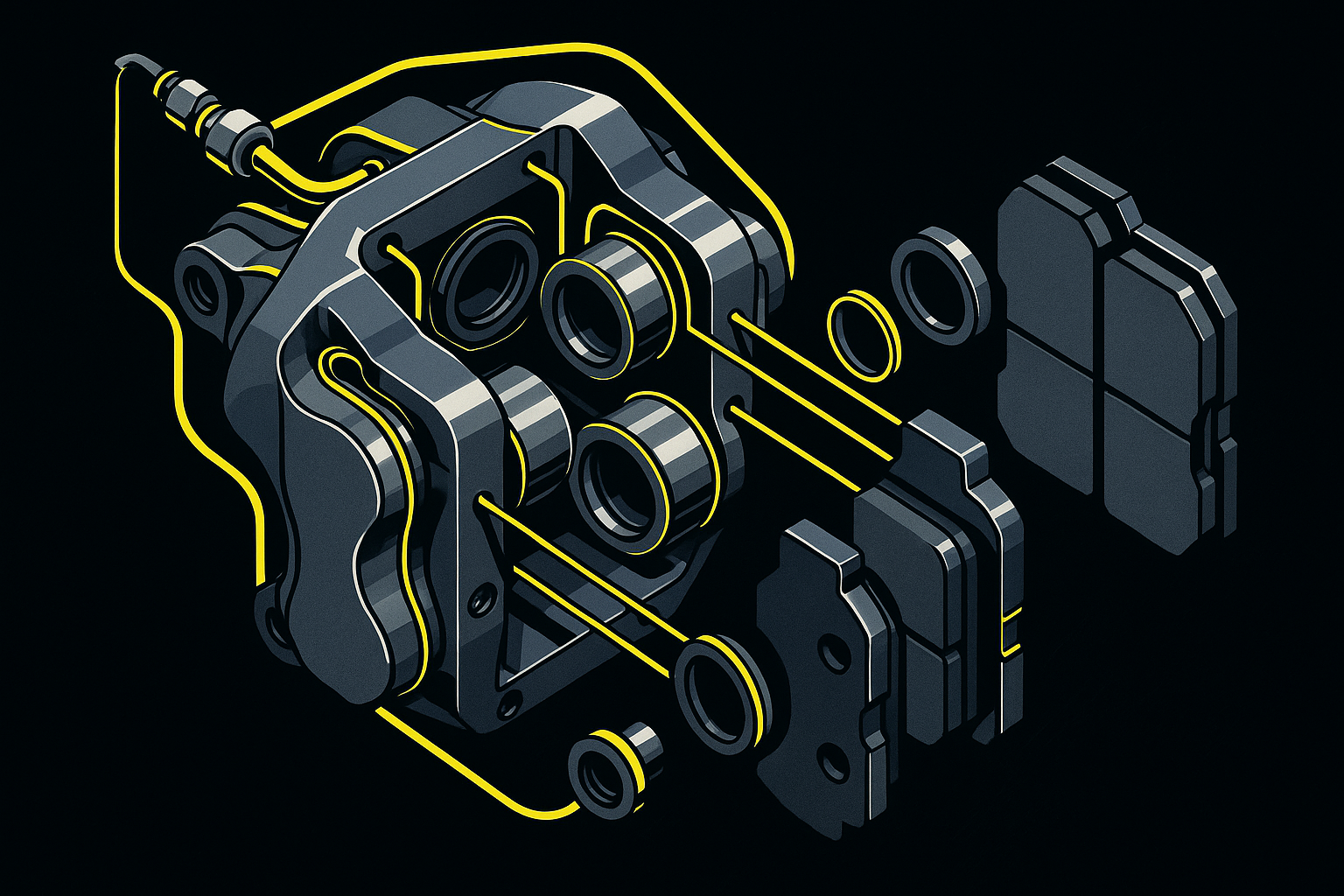
A brake caliper is the hydraulic component responsible for pressing the brake pads against the disc to slow the vehicle down. Without it, the pressure generated in the hydraulic circuit could never be converted into effective braking force. Understanding how it works is essential for maintaining or upgrading the safety of any vehicle.
In this guide we answer the most common questions about brake calipers: differences between types, symptoms of failure, when to replace them, and how to choose the right option for road, trackday or full competition use.
⭐ 4.8+480 valoraciones
verificadas
Own manufacturehigh-performance calipers made in Europe
Full cataloguesolutions for car, motorbike, kart and special vehicles
Technical advicespecialists on hand to answer every question
24–48h dispatchreceive your order on the mainland in record time
What will you be using your brake caliper for?
Brake Caliper Types: Which One Do You Need?
| Model | Piston Type | Weight | Thermal Performance | Recommended Use |
|---|---|---|---|---|
| Floating caliper (1 piston) | 1 sliding piston | Light | Standard | Road & daily driving |
| Fixed 2-piston caliper | 2 opposed pistons | Medium | Improved | Sport & mixed use |
| Fixed 4-piston caliperTop choice | 4 opposed pistons | Medium-high | High | Trackday & sport |
| Fixed 6-piston caliper | 6 opposed pistons | High | Very high | Competition & rally |
| Monoblock caliper | Variable (2–6) | Very low | Exceptional | Pure competition |
| Electromechanical caliper | Integrated electric motor | Medium | Standard | Electric & hybrid vehicles |
How Does a Brake Caliper Work? The Hydraulic Principle Explained
The brake caliper operates on Pascal's principle: pressure applied to an enclosed fluid is transmitted equally in all directions. When the driver presses the pedal, the master cylinder generates pressure in the hydraulic circuit. That pressure travels through the brake hoses to the caliper, where it acts on one or more pistons, forcing them towards the brake disc.
The pistons press the brake pads against the disc surface. The resulting friction converts the vehicle's kinetic energy into heat, bringing it to a controlled stop. The quality of this process depends directly on the condition of the pistons, seals, brake fluid and the pads fitted.
In a fixed caliper with multiple pistons, pressure is distributed more evenly across the full pad surface, improving initial bite, reducing uneven wear and allowing higher operating temperatures without loss of efficiency — all critical factors in trackday and motorsport environments.
Brake Caliper Types: Key Differences and Applications
Brake calipers are classified by design and intended application. Floating or sliding calipers are the most widespread type in production vehicles: they have pistons on one side only and slide on guide pins to clamp both pads. Their design is economical and adequate for everyday use, but performance drops under sustained high thermal loads.
Fixed calipers, in contrast, are rigidly mounted to the upright or bracket without lateral movement and carry pistons on both faces of the disc. This design delivers a more direct response and more balanced force distribution, making it the preferred choice in performance cars, karts, competition motorbikes and rally vehicles. Within fixed calipers, the number of pistons — 2, 4 or 6 — determines the contact area and the maximum clamping force available.
Monoblock calipers represent the highest tier: machined from a single billet aluminium block, they eliminate any structural flex point and maximise rigidity. They are standard in high-level motorsport. Finally, electromechanical calipers replace hydraulic pistons with an electric actuator, used primarily in electric and hybrid vehicles as an active parking brake system.
At SDT Brakes we design and manufacture our brake calipers to the same standards applied by professional racing teams. Every unit passes dimensional and pressure checks before leaving our European facility, ensuring that what arrives at your workshop or in the paddock performs exactly as it should. Average rating of 4.8 out of 5 across more than 480 verified reviews.
Frequently asked questions
What exactly is a brake caliper and what does it do?
A brake caliper is the hydraulic component that houses the pistons and brake pads in a disc brake system. When you press the pedal, brake fluid pressure pushes the pistons outward, clamping the pads against the disc and generating the friction needed to decelerate the vehicle in a controlled manner.
What is the difference between a floating and a fixed brake caliper?
A floating caliper has pistons on one side only and slides laterally along guide pins to press both pads against the disc; it is cost-effective and common in everyday vehicles. A fixed caliper, by contrast, has pistons on both sides of the disc, delivering more uniform pressure and a more direct pedal feel, making it the preferred choice for performance and competition applications.
How many pistons should a competition brake caliper have?
Competition applications typically use 4- or 6-piston calipers, as the additional pistons distribute clamping force more evenly across the pad face, improve initial bite and manage the heat generated during heavy braking more effectively. Monoblock 6-piston calipers are standard in rally and high-level trackday use.
How do I know if my brake caliper is faulty and needs replacing?
Common signs of a failing brake caliper include: the vehicle pulling to one side under braking, uneven pad wear, brake fluid leaking around the caliper body, a spongy or soft pedal, or excessive resistance when spinning the wheel by hand with the vehicle raised. Any of these symptoms warrant an immediate inspection.
Can a brake caliper be repaired or is it better to replace it?
Calipers with minor piston seal leaks can often be rebuilt using a repair kit, provided the caliper body is not cracked or heavily corroded. For competition use, however, direct replacement with a high-performance caliper is strongly recommended to guarantee safety and consistent braking performance throughout the entire event.
What materials are used in high-performance brake calipers?
High-performance brake calipers are typically machined from forged or billet aluminium, reducing weight considerably compared to cast iron units. In extreme motorsport applications, composite materials or titanium bridge inserts are used to minimise heat transfer towards the brake fluid and further reduce unsprung mass.
Does the type of brake caliper affect pad and disc choice?
Yes, directly. Each caliper has a specific pad geometry; fitting the wrong compound can compromise the entire braking system. Equally, the number of pistons and the clamping force they generate influence the ideal disc in terms of diameter, thickness and ventilation design. Always consult a specialist before mixing components.
How long does a brake caliper last and how often should it be inspected?
On road use a caliper can last the lifetime of the vehicle with proper maintenance, though it should be inspected at every pad change. For track or competition use, inspection must take place between sessions or events, checking pistons, seals, boots and the absence of any brake fluid leaks around the caliper body.
Why SDT Brakes?
Proven experienceYears of motorsport development back every brake caliper in the SDT Brakes catalogue.
Own manufactureWe control every stage of production to ensure maximum quality and precision in every unit.
Fast delivery24–48h dispatch to mainland Spain so you never miss a day on track.
Technical supportOur specialists help you choose the right caliper for your vehicle and intended use.
Easy returns14-day hassle-free returns if the product does not meet your requirements.
SDT Brakes: caliper solutions for every level of performance
Whether you are upgrading the braking system on your daily driver or preparing a full competition car, SDT Brakes has the right technical solution. European manufacture, a comprehensive catalogue and no-cost expert advice: your next perfect stop starts right here.
Updated: 20 June 2026