 Español
 English

Shopping Cart
⭐ 4.8/5 (480+ verified reviews)24–48h delivery mainland SpainEuropean own-brand manufacturingFree technical advice
SDT Brakes
Brake Problems: Symptoms, Causes and Solutions
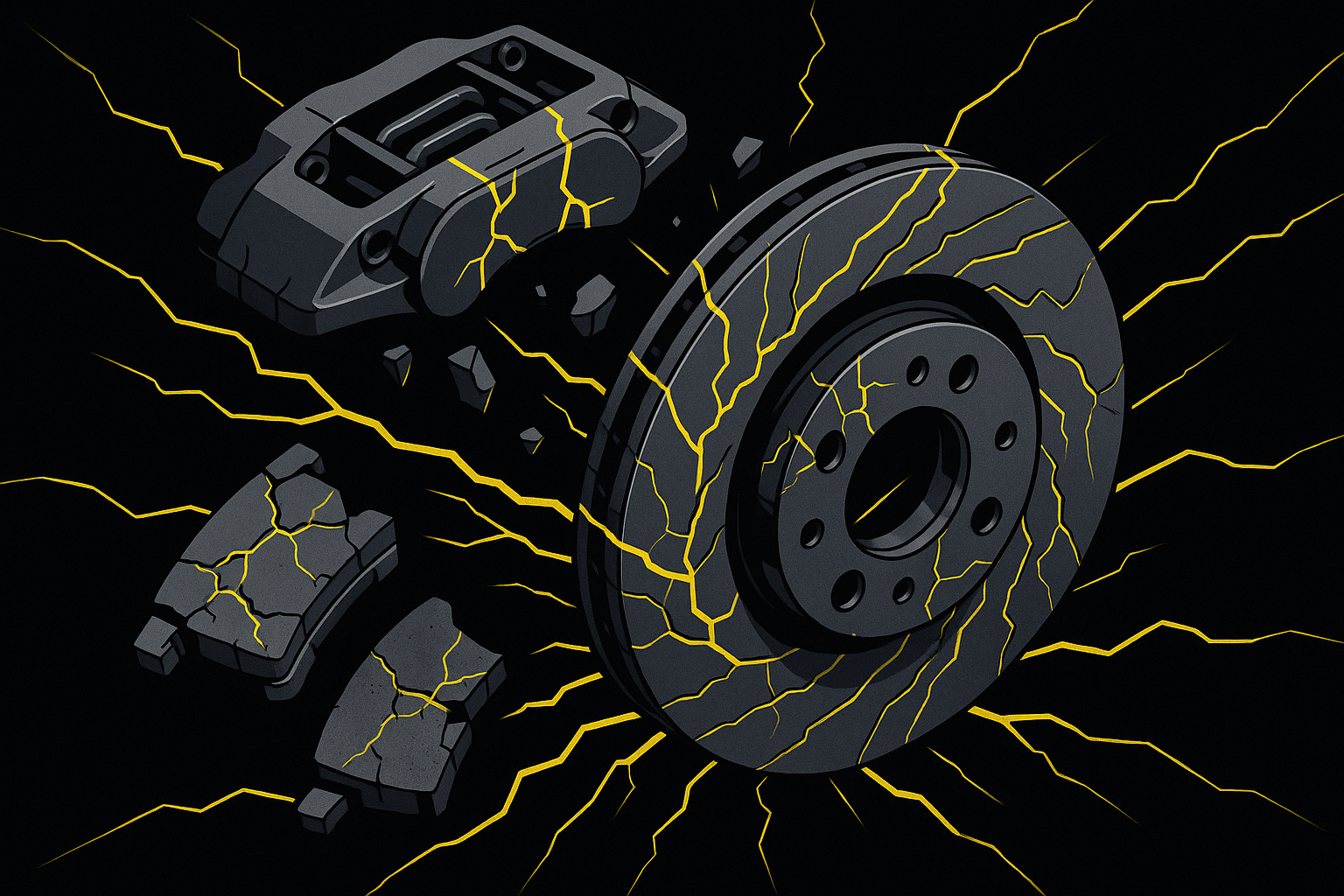
A failing brake system leaves no margin for error. Strange noises, a spongy pedal, vibrations or reduced stopping power are warning signs that should never be ignored — whether you drive daily or on track.
At SDT Brakes we have spent years helping drivers and workshops diagnose and resolve the most common brake problems. This guide answers the most frequent questions with clear technical explanations so you know exactly what is happening and how to act.
⭐ 4.8+480 valoraciones
verificadas
Clear diagnosiswe identify the symptom and its root cause
Proven solutionsown-brand, European-manufactured components
Free technical adviceget expert answers before you buy
24–48h deliveryreplace parts before the problem gets worse
What is the main symptom you are noticing with your brakes?
What is your problem? Symptom and solution comparison
| Symptom | Most likely cause | Urgency | Recommended solution | Affected component |
|---|---|---|---|---|
| Soft or spongy pedal | Degraded fluid or air in the circuit | High — do not drive | Bleed system and replace DOT4 fluid | Brake fluid |
| Vibration when brakingTop choice | Warped disc or uneven pad deposits | Medium–high | Replace brake discs | Brake discs |
| Metallic squealing noise | Pads at limit or metal-on-metal contact | High — risk of disc damage | Replace brake pads immediately | Brake pads |
| Imprecise or vague braking feel | Rubber hoses expanding under pressure | Medium | Fit braided stainless steel brake hoses | Brake hoses |
| Car pulls to one side under braking | Seized calliper or uneven pad wear | High — stability risk | Inspect callipers and pads | Brake callipers |
| Burning smell after braking | Overheated pads or partially applied handbrake | Medium–high | Check temperature and components | Pads / brake fluid |
The most common brake problems and how to recognise them
The braking system is the most critical active safety element on any vehicle. Its wear is gradual, and its warning signs can easily be dismissed as minor annoyances — until they become a genuine failure. Knowing the symptoms allows you to act in time and avoid far more costly repairs down the line.
Among the most frequent brake problems, a spongy pedal reveals air in the circuit or degraded brake fluid. Vibration when braking almost always points to warped discs or uneven pad deposits. Metallic squealing is the alarm signal for pads at the end of their service life. And a car that pulls to one side under braking indicates a seized calliper or an imbalance between axles.
Each of these symptoms has an identifiable cause and a specific solution. Ignoring them not only puts safety at risk but typically leads to secondary damage — deep scoring on the disc surface or accelerated calliper deterioration — significantly increasing the final repair bill.
How to choose the right components for each brake fault
Once the problem has been identified, choosing the correct component is essential for a lasting repair. Replacing only the brake pads when the discs show deep scoring or warping guarantees the problem will return within a few weeks. Equally, fitting new discs without checking the condition of the brake fluid can leave the system vulnerable to fade at high temperatures.
At SDT Brakes we recommend approaching a brake system service comprehensively: fresh fluid in good condition, pads matched to the intended use, discs in proper working order and, where improved pedal feel is desired, braided stainless steel hoses to replace the original rubber lines. This approach is especially important on performance, trackday or competition vehicles where thermal and mechanical demands far exceed those of everyday urban driving.
Every component in our catalogue is produced under strict European quality standards. We offer full compatibility for car, motorbike, kart, bicycle and specialist vehicles, backed by free technical advice to ensure every customer receives exactly what their vehicle requires.
SDT Brakes is a European brand specialising in high-performance braking systems with its own manufacturing. Over 480 verified customers rate us 4.8 out of 5. We ship within 24–48h across mainland Spain, with a 14-day return guarantee and free technical advice before and after every purchase.
Frequently asked questions
Why does my brake pedal feel soft or spongy?
A soft or spongy brake pedal usually indicates air in the hydraulic circuit or brake fluid that has absorbed moisture and degraded. DOT brake fluid is hygroscopic and loses effectiveness over time, lowering its boiling point. The solution is to bleed the system thoroughly and replace the fluid with a high-quality DOT4 product with an adequate dry boiling point.
What causes vibration or pulsation when braking?
Vibration when braking is the classic symptom of a warped disc or one with uneven pad material deposits on its surface. This can result from repeated hard braking from high temperatures, parking with hot brakes or simple uneven wear over time. In most cases the solution involves replacing the brake discs and, in many instances, the brake pads as well.
Why do my brakes squeal or make noise?
Brake noise can be caused by pads worn down to the metal wear indicator, pads contaminated with grease or brake fluid, debris trapped between disc and pad, or a pad compound operating outside its correct temperature range. A persistent metallic squeal demands immediate inspection to avoid scoring the disc surface and increasing repair costs significantly.
What does it mean when the car pulls to one side under braking?
When a vehicle pulls to one side during braking, the most common cause is a seized brake calliper with a piston that is not returning correctly, generating asymmetric braking force. It can also result from heavily uneven pad wear between sides or a disc in significantly worse condition on one corner. This situation compromises vehicle stability and must be corrected without delay.
How often should brake fluid be changed?
Most manufacturers recommend changing brake fluid every two years or every 40,000 km, whichever comes first. In motorsport, trackday or performance driving the interval should be shorter, as higher temperatures degrade the fluid faster. Fluid that has absorbed moisture shows a reduced boiling point and can cause brake fade or sudden loss of braking performance at the worst possible moment.
What are braided brake hoses and when should I fit them?
Braided stainless steel brake hoses replace the original rubber lines with an inextensible stainless-steel braided sleeve that does not expand under hydraulic pressure. The result is a more direct pedal feel, more progressive response and greater precision at the lever or pedal. They are particularly recommended for performance driving, trackdays or whenever high-performance discs and pads have been fitted.
Is a burning smell after braking always dangerous?
A brief burning smell during the bedding-in period of new brake pads is perfectly normal and will disappear within the first few kilometres. However, if the smell persists during normal driving it can indicate pad overheating, brake fluid nearing its boiling point, or a partially engaged handbrake. In all these cases stop safely, allow the system to cool completely and investigate the cause before continuing.
Can I mix brake fluids from different brands or specifications?
Mixing brake fluids of different DOT specifications is not recommended. DOT3, DOT4 and DOT5.1 are all glycol-based and technically miscible, but blending them degrades the overall performance and reduces the effective boiling point of the mixture. DOT5 silicone-based fluid is entirely incompatible with all glycol types. The correct approach is always to flush the system completely and refill with fresh fluid of the correct specification.
Why SDT Brakes?
Technical diagnosisOur technical team identifies the root cause of any brake failure quickly and accurately.
Own manufactureComponents manufactured in Europe using premium-grade materials and strict quality control.
Express delivery24–48h delivery to mainland Spain so your vehicle is back on the road without delay.
Proven trustOver 480 verified reviews with an average rating of 4.8 out of 5 from real customers.
Free adviceFree technical consultation before and after purchase — no obligation, no upselling.
Fix your brake problems with European-made quality
SDT Brakes stocks every component you need for each symptom: high-temperature DOT4 fluids, braided steel hoses for precise pedal feel, and own-brand discs and pads built to exacting European standards. Ask our technical team and receive your order in 24–48h.
Updated: 20 June 2026